

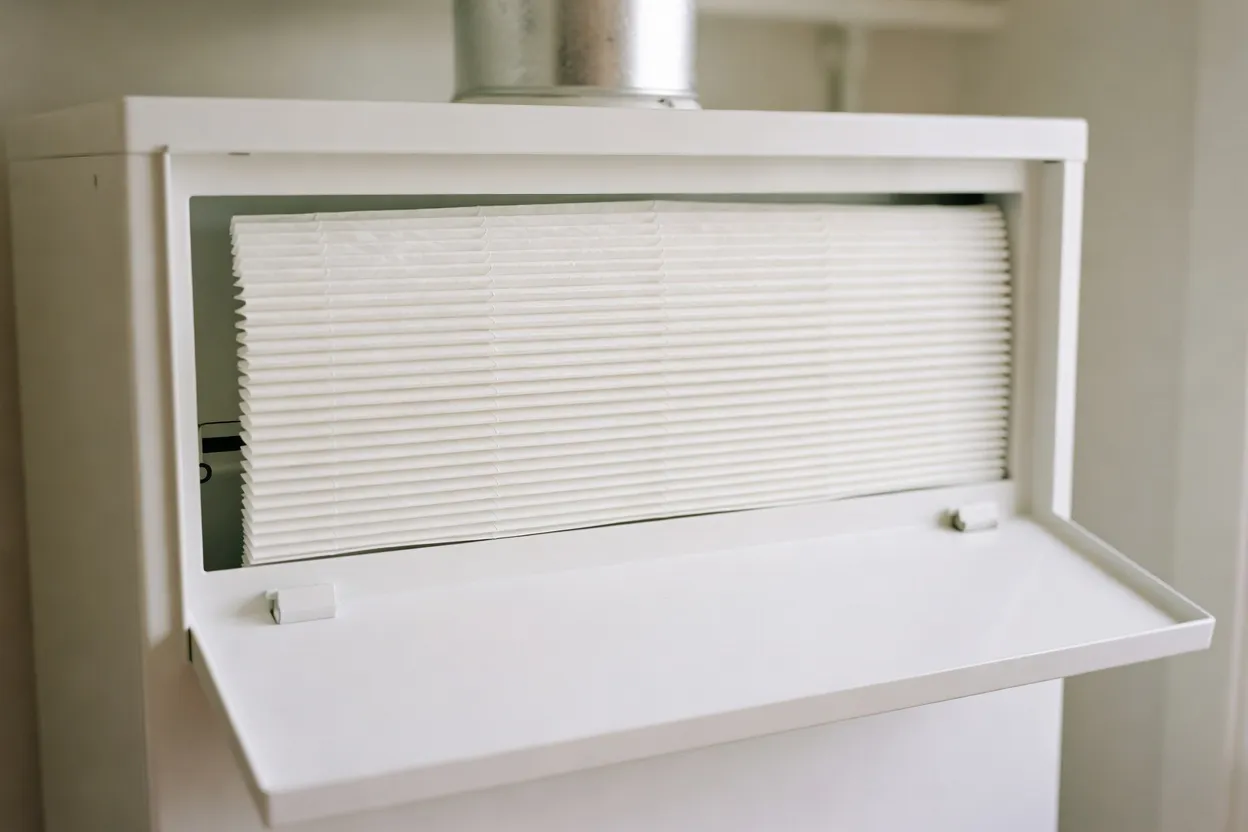
Ventilation: lifespan and cost
Ventilation affects both indoor air and moisture in the structure. The table shows how long the parts last and what a replacement usually costs.
The ranges apply to a normal-sized house. Actual cost depends on size, access and region. Lifespan means technical lifespan with normal upkeep.
| Component | Lifespan | Replacement cost |
|---|---|---|
| Heat recovery ventilation unit | 20 yrs (15-25) | 80 000-200 000 kr |
| Extract fan | 17 yrs (15-20) | 10 000-30 000 kr |
| Ventilation ducts | 40 yrs (30-50) | 30 000-100 000 kr |
| Ventilation filters | 1.5 yrs (1-2) | 500-2 000 kr |
How long does a heat recovery unit last?
The unit itself lasts many years, but the filters are a recurring item that needs changing often for the system to work and not draw more power than needed. The ducts sit hidden and last longest of all. A house with heat recovery reclaims warmth from the extract air and is more expensive but more efficient than plain extract ventilation.
What does replacing ventilation cost?
Replacing a unit or an extract fan is a contained job. Running new ducts in a house that lacks them is more expensive. Filter changes are cheap but need doing regularly, and if neglected the unit wears out early. The cost in the table applies to a normal-sized house.
What the age of the house tells you
Some build years carry known risks for exactly these parts. Here are the most common ones.
Asbestos Houses built 1930–1982
Asbestos was widely used during this period. Sampling is required before renovation.
Ventilation condition Houses built 1930–1970
Natural draught ventilation designed for leakier buildings. After windows are replaced and extra insulation is added, it often stops working.
Chimney stack with cracking Houses built 1900–1960
Older chimney stacks can have cracks that leak flue gases. A fire and health risk if it is in use.
Do you need a ventilation check for a house?
Single-family houses with natural or extract ventilation are usually exempt from the mandatory ventilation inspection, but working ventilation still matters to avoid moisture and poor air.
Can poor ventilation cause moisture damage?
Yes. When damp air is not carried away it gathers in cold spaces like attics and crawl spaces and can cause mould. Older houses with inadequate ventilation are especially exposed; see the age note below.
Related
Terms used here
Heimer does this for you
Paste a listing and get the monthly cost, the risks and what to check.
Analyse a home See a finished analysis