

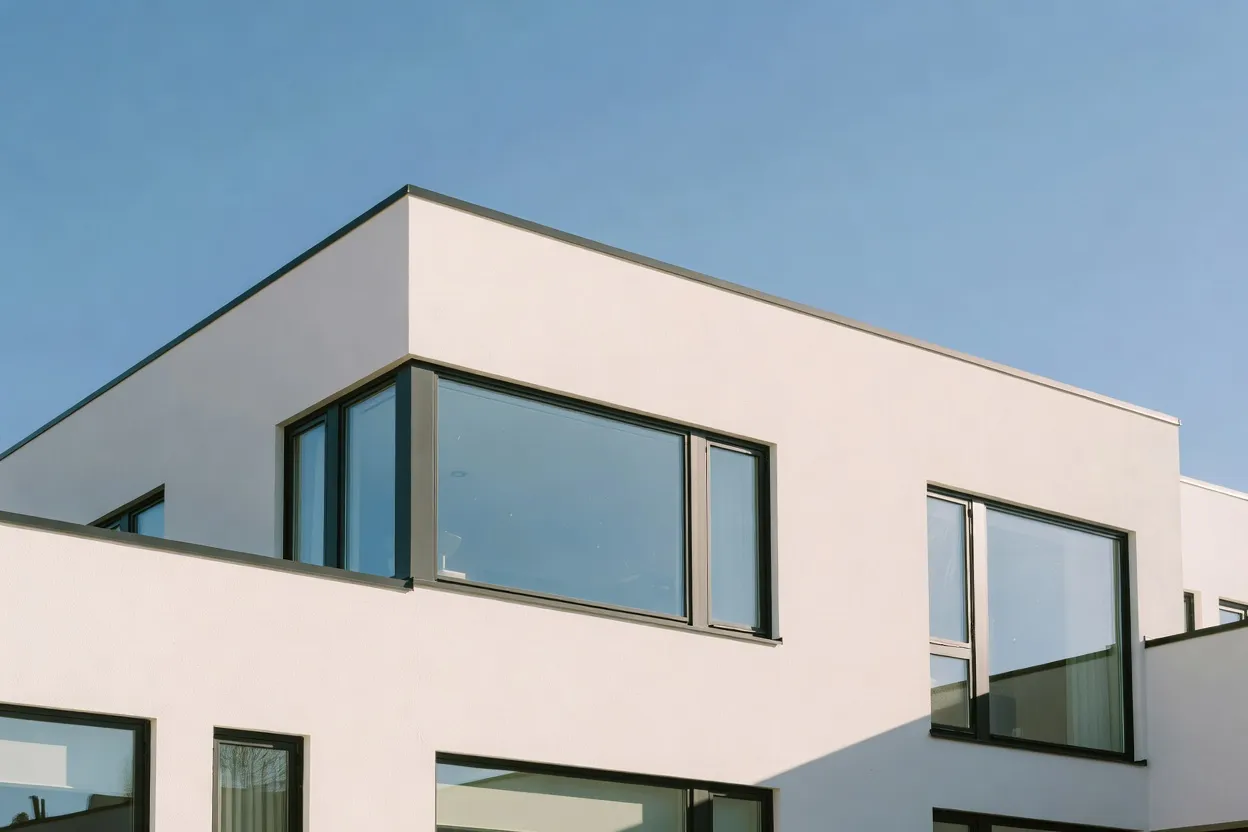
Risks in a Swedish house built in the 2000s
Houses from the 2000s are usually in good shape. The main thing to check is a single-stage sealed facade. Here is what to look at calmly before you bid.
Updated: 2026-06-02
A house from the 2000s is usually a young, technically modern home, and age is not the same as poor condition. The single most important risk to check is the enstegstätad fasad (single-stage sealed facade), which was built widely until around 2007. Beyond that it is mostly ordinary upkeep: a bathroom approaching the end of its life, and moisture in the attic or foundation. Much of this is visible at a viewing if you know where to look.
Single-stage sealed facade: the big question for this age
This is the risk to take seriously. An enstegstätad fasad (single-stage sealed facade) has render applied directly onto the insulation with no air gap behind it. That means there is only one outer sealing layer against the rain, and water that works its way in behind the render stays in the wall and can only dry out slowly by evaporation. The risk is greatest during driving rain and where there are holes or cracks in the surface, for example around windows.
The method was common from around 1990-2007, before it became known as prone to damage, so a house built in the early 2000s may well have it. This is one of the bigger building scandals in Sweden and affects many thousands of single-family houses.
Here is what to look for:
- Cracks in the render, especially around windows and joints
- Discolouration or bulges in the facade
- A hollow sound when you tap on the render
Fixing a single-stage sealed facade is expensive. The cost often lands in the order of 500 000-2 000 000 kr depending on the size of the house and how far any damage has gone. If you are even slightly unsure, bring in a besiktningsman (building surveyor) who can take a moisture reading inside the wall. That is money well spent before you bid.
The bathroom: check the age and the waterproofing
A bathroom usually has a life of around 25-30 years, and the tätskikt (waterproofing layer) behind the tiles can fail even when the surface looks intact. If the bathroom is original in a house built in the early 2000s, it is starting to approach that age, and then it is reasonable to budget for a renovation within a few years.
Here is what to look for:
- Cracked or dried-out grout
- Loose or hollow-sounding tiles
- Discolouration or moisture around the floor drain
A bathroom renovation with new waterproofing often lands in the order of 150 000-350 000 kr. Ask the agent when the bathroom was last renovated and whether there is a receipt and a våtrumsintyg (wet-room certificate), so you know where it is in its lifecycle.
Moisture in the attic and foundation
Moisture is the most common type of damage in houses, and attics and foundations are especially sensitive. A cold attic with insufficient ventilation or faulty insulation can get moisture and mould on the underside of the roof. Krypgrunder (ventilated crawl spaces) are particularly exposed, because organic material and a cool, damp environment can cause microbial growth that affects the indoor environment. Basement walls and slabs below ground are always surrounded by moist soil.
This is often manageable, but it is worth a look. In the attic, look for dark patches, smell, and that the ventilation is clear. If the house has a crawl space or basement, ask whether there is a dehumidifier and whether moisture has been measured. A building surveyor checks all of this as routine.
Other things to keep an eye on
| Risk | What you check | Approximate cost |
|---|---|---|
| Cold attic with moisture problems | Ventilation and insulation in the attic, smell and patches under the roof | Varies with the extent of the damage |
| Recessed spotlights with heat damage | The attic insulation around recessed spotlights, that they do not rest against the insulation | Often small, if nothing has burned |
| FTX system needing service | Ask about the last service and whether filters are changed regularly | Mainly service and filters |
What you do
- Tap and look at the facade: cracks, bulges and a hollow sound can point to single-stage sealing
- Check the bathroom’s age, grout and floor drain, and ask for the våtrumsintyg (wet-room certificate)
- Look in the attic and foundation for moisture, smell and patches, and ask about a dehumidifier
- Ask the agent about the build year, facade type and which renovations have been done
- If the facade is single-stage sealed or uncertain, book a building surveyor with a moisture reading before you bid
Terms to know
Home prices by city
Price per square metre in every district.
Common questions
Is a house from the 2000s a bad buy?
No, usually the opposite. It is a young, technically modern house, and age is not the same as poor condition. It mostly comes down to checking a few specific things, above all the facade type, before you place a bid.
What is an enstegstätad fasad (single-stage sealed facade) and why is it a problem?
It is a rendered facade where the render sits directly on the insulation with no air gap behind it. That leaves only one outer sealing layer against rain, so water that gets in stays in the wall and dries out only slowly. It can cause moisture damage, especially during driving rain and where the render has cracks.
How do I know if the house has a single-stage sealed facade?
The method was common until around 2007, so houses from the early 2000s may have it. Signs are cracks in the render around windows, bulges and discolouration. The safest way is to ask the agent about the facade type, and if you are unsure, bring in a besiktningsman (building surveyor) to take a moisture reading.
What does it cost to fix a single-stage sealed facade?
It varies a lot with the size of the house and how far any damage has gone, but it often lands in the order of 500 000-2 000 000 kr. That is exactly why it is worth investigating the facade before bidding, so you do not buy a hidden cost.
Do I need to worry about radon, asbestos or blue concrete in a 2000s house?
In practice, no. Asbestos was banned in 1982 and blåbetong (blue concrete) was made between 1929 and 1975, so both belong to older houses. Radon can occur at any age and often comes from the ground, but it is easy to measure. A radon measurement gives you a calm answer. The reference level for existing dwellings is 200 Bq/m3.
How long does a bathroom from the early 2000s last?
A bathroom usually lasts around 25-30 years, and the waterproofing layer can fail even when the surface looks intact. If the bathroom is original in a house from the early 2000s, it is approaching that age, so it is reasonable to budget for a renovation within a few years.
Know what to investigate
Find out what needs investigating. Bring questions about this particular home to the viewing.
Analyse a home See a finished analysisRead next
- Era risks in Swedish homes: what the build year says about hidden defects A home's build year predicts which hidden defects are worth checking, from blåbetong and radon to damp and facades. A calm checklist by decade.
- Home inspection and hidden defects: what to check before you buy in Sweden What a besiktning covers, how long you can hold the seller liable for hidden defects, and what you must check yourself. Plain answers for buyers.
- Risks in a Swedish house built in the 1990s (single-stage sealed facade) 1990s houses are often in good shape. Check the single-stage sealed facade, crawl space and bathroom. What to look for and what it can cost.