

Risks in a Swedish house built in the 1990s (single-stage sealed facade)
1990s houses are often in good shape. Check the single-stage sealed facade, crawl space and bathroom. What to look for and what it can cost.
Updated: 2026-06-02
A house from the 1990s is often in fine shape. It was built with modern materials, has good insulation and rarely needs a pipe replacement (stambyte) in the coming years. A few decades on the clock does not mean the house is bad, it just means a few things are worth a closer look.
Three things stand out for this particular period: the single-stage sealed facade (the most serious), the crawl space with moisture problems, and the bathroom nearing the end of its life. None of them is a disaster, but all three are worth checking before you put in a bid. We will walk through them calmly, one at a time.
Single-stage sealed facade
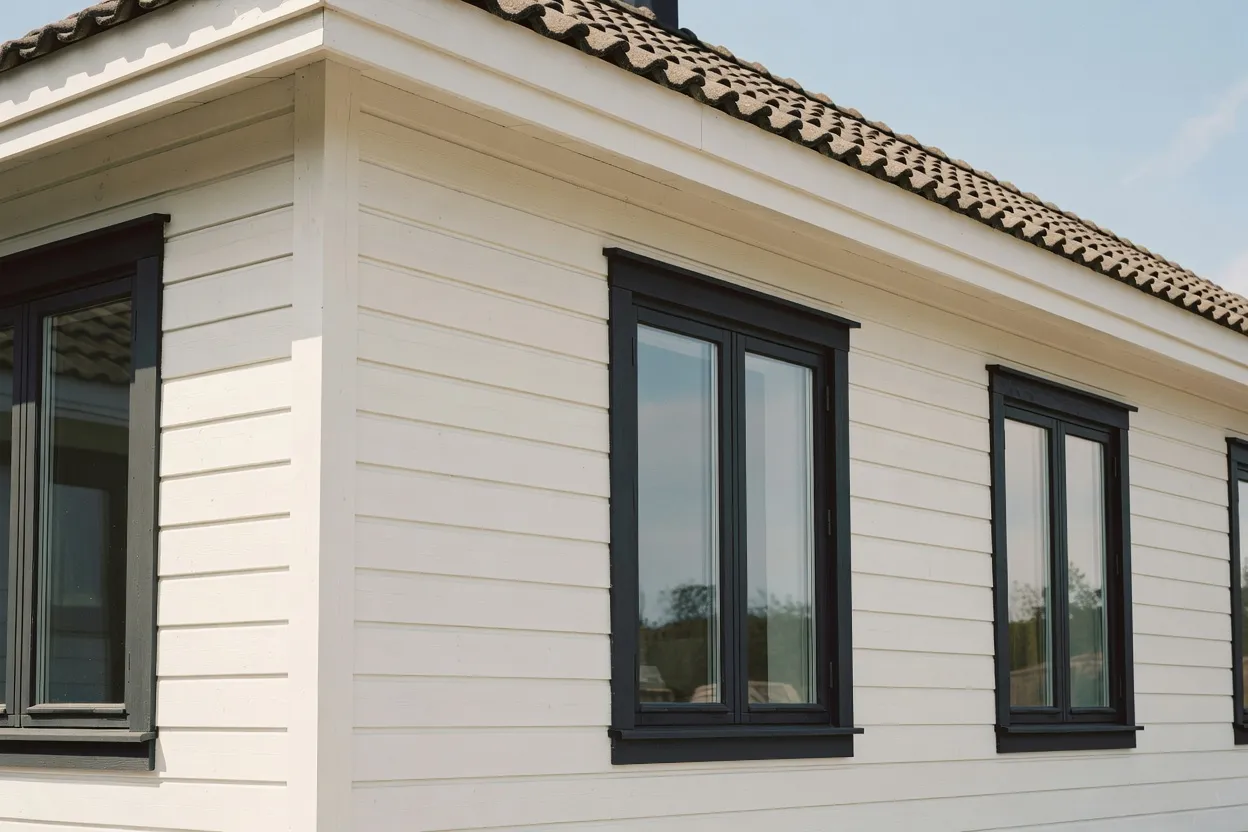
This is the risk you really want to rule out in a 1990s house. A single-stage sealed (enstegstätad) facade means the render sits directly against the insulation, with no air gap behind it. So there is only one outer barrier against rain, and once water gets in, it stays in the wall and dries slowly. In a timber-frame wall, which is sensitive to moisture, that can lead to rot and mould over time. This is one of Sweden’s biggest building scandals, and on the order of tens of thousands of houses and over a hundred thousand flats are affected.
What to look for:
- Cracks in the render, especially around windows
- Discolouration or bulging in the facade
- A hollow sound when you knock on the facade
A fix usually lands in the range of 500 000-2 000 000 kr if the whole facade has to be rebuilt, so this is not something to guess about. If you do not know how the facade is built, this is the single most important question to ask the agent and to raise with a surveyor (besiktningsman).
Crawl space with moisture problems
Many houses from this period stand on a crawl space (krypgrund), the gap between the ground and the floor. The trouble is that older crawl spaces often have too little ventilation and ground insulation. In summer, the warm, humid outdoor air cools down inside the crawl space, the relative humidity rises, and that can lead to mould and rot on the floor joists. It is a common find, but far from all crawl spaces have problems.
What to look for:
- A smell of mould when you open the crawl space hatch
- Dark or damp wood on the floor joists
- Condensation on the plastic sheeting
Fixing a crawl space with a dehumidifier, new insulation or sealing usually costs in the range of 100 000-400 000 kr depending on how far the moisture has spread. Open the hatch and have a sniff, it often tells you more than you would think.
Bathroom nearing the end of its life
A bathroom lasts roughly 25-30 years, and bathrooms from the late 1980s and the 1990s are now reaching that age. The tricky part is that the waterproofing layer (tätskikt) behind the tiles can have started to give way even if the surface looks intact. If the bathroom is original, it is reasonable to plan for a renovation within a few years.
What to look for:
- Cracked or hardened grout
- Loose or hollow-sounding tiles
- Discolouration around the floor drain
A brand new bathroom usually costs in the range of 150 000-350 000 kr. Ask for a receipt or certificate for when it was last redone, a professionally built bathroom with a proper waterproofing layer is worth a great deal more than an original.
Other things to keep an eye on
| Risk | What you check | Approximate cost |
|---|---|---|
| Brick veneer wall with galvanised ties | Cracks in the joints, bulging brick (the wall ties can rust) | Varies with extent |
| Cold attic with moisture problems | Ventilation and insulation in the attic, damp patches at the ridge | Varies with extent |
| Mechanical heat-recovery ventilation (FTX) needing service | Ask about the last service and whether the filters are changed regularly | Ongoing service, unit replacement if needed |
These are milder points. They rarely decide a purchase on their own, but they are good to know so you understand what you are taking on.
A reassuring note about older risks
You normally do not need to worry about blue concrete (blåbetong) or asbestos in a house that was actually built in the 1990s. Blue concrete was manufactured between 1929 and 1975, and asbestos has been prohibited for use in Sweden since 1982. A genuine 1990s house should therefore have neither in its original materials. If you still want to know the radon level, the reference level for existing dwellings is 200 Bq/m3, and a simple radon measurement gives you the answer.
What you do
- Ask the agent directly how the facade is built, and if it is rendered, find out whether it is single-stage sealed
- Open the crawl space hatch and have a sniff, look for dark wood and condensation
- Ask for a receipt or certificate for when the bathroom was last renovated
- Book a surveyor (besiktningsman) who looks especially at the facade and the foundation
- Do a radon measurement if you want the radon level in black and white
Terms to know
Home prices by city
Price per square metre in every district.
Common questions
Is a house from the 1990s in poor condition?
No, usually not. Houses from the 1990s were built with modern materials and have good insulation. A few decades on the clock does not mean the house is bad, only that a few things, like the facade, crawl space and bathroom, are worth a closer look.
What is a single-stage sealed (enstegstätad) facade and why is it a problem?
It means the render sits directly against the insulation with no air gap behind it. There is only one outer barrier against rain, so if water gets in it stays in the wall and dries slowly, which can lead to rot and mould in a timber-frame wall. It is the most serious risk for this period, and fixing it can be expensive.
How much does it cost to fix a single-stage sealed facade?
If the whole facade has to be rebuilt, it often lands in the range of 500 000-2 000 000 kr. The exact figure depends on the size of the house and how far any moisture damage has spread, so have a surveyor (besiktningsman) look before you bid.
Do I need to worry about asbestos or blue concrete (blåbetong) in a 1990s house?
Normally no. Blue concrete was manufactured between 1929 and 1975, and asbestos has been prohibited for use in Sweden since 1982. A house built in the 1990s should therefore have neither in its original materials.
How do I know if the bathroom needs renovating?
A bathroom lasts roughly 25-30 years, so an original from the 1990s is starting to reach its age. Look for cracked grout, loose tiles and discolouration around the floor drain, and ask for a receipt for when it was last redone. The waterproofing layer (tätskikt) can give way even if the surface looks intact. A new bathroom often costs 150 000-350 000 kr.
What should I check in the crawl space (krypgrund)?
Open the hatch and smell for mould, look for dark or damp wood on the floor joists and condensation on the plastic sheeting. Older crawl spaces often have poor ventilation, but far from all have problems. A fix usually costs in the range of 100 000-400 000 kr.
Know what to investigate
Find out what needs investigating. Bring questions about this particular home to the viewing.
Analyse a home See a finished analysisRead next
- Era risks in Swedish homes: what the build year says about hidden defects A home's build year predicts which hidden defects are worth checking, from blåbetong and radon to damp and facades. A calm checklist by decade.
- Home inspection and hidden defects: what to check before you buy in Sweden What a besiktning covers, how long you can hold the seller liable for hidden defects, and what you must check yourself. Plain answers for buyers.
- Risks in a Swedish house built in the 1980s The common risks in 1980s houses: moisture in sill plates, crawl spaces and bathrooms nearing end of life. What to check and what it usually costs.
- Risks in a Swedish house built in the 2000s Houses from the 2000s are usually in good shape. The main thing to check is a single-stage sealed facade. Here is what to look at calmly before you bid.